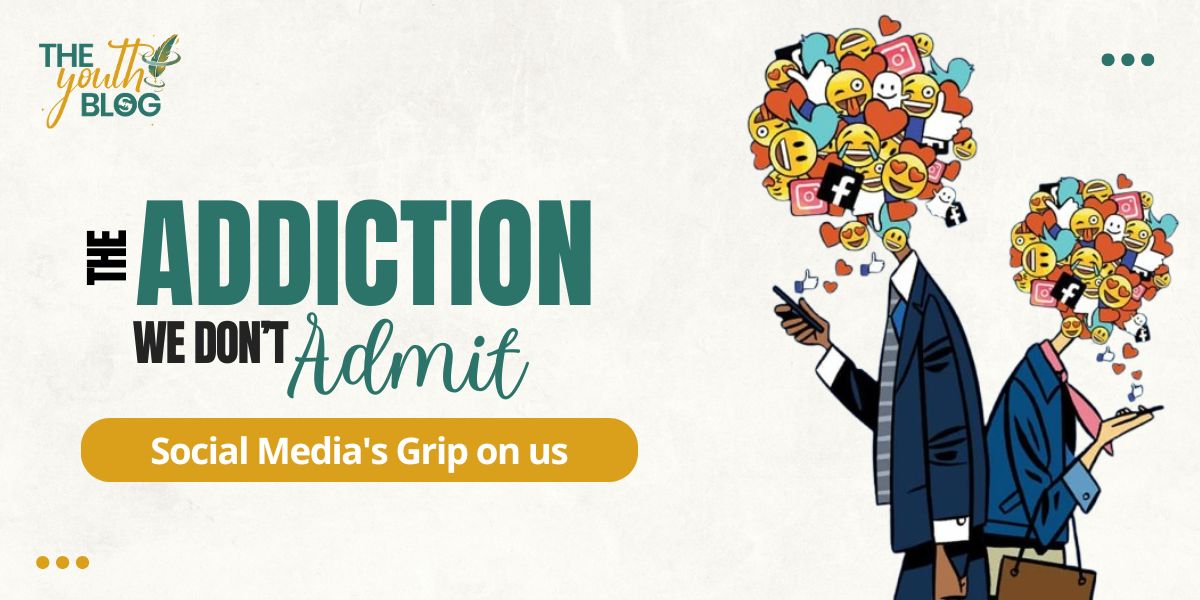
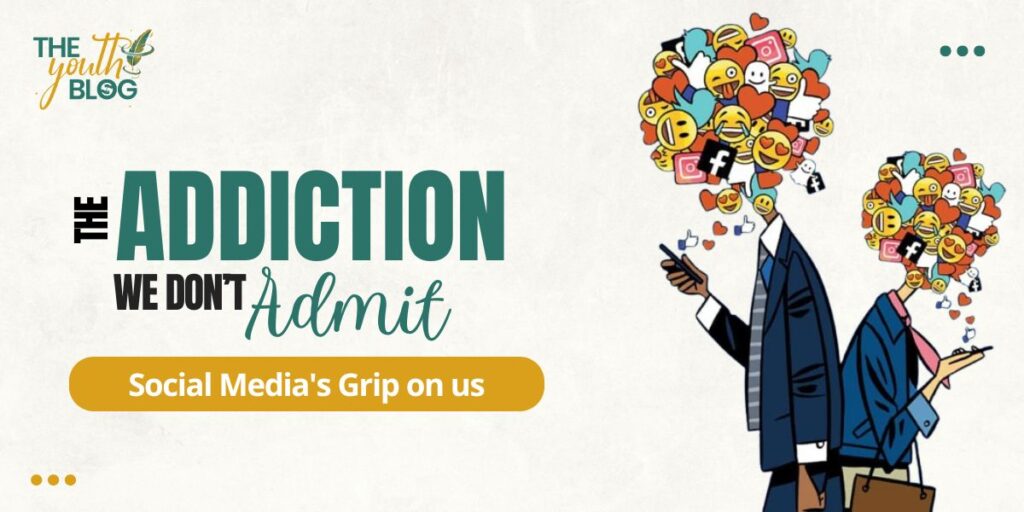
The Addiction We Don’t Admit: Social Media’s Grip on Us

It’s late at night. The world around you is quiet, the lights are off and you know you should be
asleep. Yet your phone is still in your hand, glowing in the dark. You scroll again.
One more video. One more update. One more like.
If this sounds familiar, you are not alone. Millions of people around the world are trapped in this same late-night cycle. What began as a tool for communication has gradually turned into a psychological trap that shapes our emotions, thoughts and even our sense of identity.
Where Does This Addiction Stem From?
At the root of this addiction lies a simple psychological truth: human beings crave validation.
Each like, comment, or share triggers a small shot of dopamine, the brain’s “reward chemical.”
Over time, the mind starts craving these rewards, pushing users to scroll endlessly. What feels
like a harmless habit slowly turns into dependency, where one’s mood begins to rise and fall
with every notification. This constant cycle creates a loop that users struggle to break, even
when they are fully aware of its negative effects.
Read More: Is All ‘Viral Content’ Worth the Hype? Uncovering the Downside.
The Downside of Social Media Addiction
Comparisons With Strangers:
But social media addiction is more than just a craving for likes; it is a constant comparison
game. Algorithms feed us polished versions of other people’s lives—perfect holidays, filtered
faces and flawless bodies. As users compare their ordinary lives to these unrealistic standards,
feelings of inadequacy begin to grow. Multiple studies show a clear link between excessive
social media use and increased anxiety, loneliness and low self-esteem, especially among
teenagers and young adults who are still forming their identities.
Measuring Self-Worth:
Another worrying aspect is how social media gradually reshapes the way we measure our
worth. Instead of valuing ourselves through personal achievements, relationships, or inner
growth, many users begin to judge their self-esteem through numbers on a screen —likes,
followers, views, and comments. Over time, external approval becomes the only source of
validation, making people more insecure and emotionally fragile. When a post does not
perform well, users internalize it as a personal failure, even though these metrics often depend
on algorithms rather than real human engagement.
Emotional Exhaustion:
The mental burden does not end there. The pressure to appear “happy” online creates
emotional exhaustion. Many users feel compelled to maintain an ideal image even when they
are struggling in real life. They smile for photos, post cheerful captions and hide their true
emotions behind carefully crafted updates. This gap between reality and online identity leads to confusion, dissatisfaction and a quiet sense of isolation. Ironically, the platforms designed to
connect us often leave us feeling more alone than ever.
Psychological Pressure:
Another psychological factor is the fear of missing out—FOMO. The endless stream of updates
convinces us that everyone is living a more exciting life. This fear pushes users to stay online
even when they want to disconnect. As a result, sleep patterns are disrupted, attention spans
shorten, productivity drops and real-life relationships weaken. The phone becomes not just a
device, but a source of constant pressure.
We must understand that this is not just about willpower; it is a battle between human minds
and billion-dollar algorithms designed to capture our attention. Recognizing this helps us stop
blaming ourselves and start taking realistic steps toward healthier habits.
How To Break The Addiction?
The solution is not to abandon social media completely, but to use it with awareness. Digital
boundaries such as time limits, screen breaks and detox periods help restore control. Each of us
can take small steps to protect our mental space: turn off unnecessary notifications, unfollow
accounts that trigger stress and replace them with pages that inspire, educate or uplift.
More importantly, schools and families must educate young people about healthy online behavior. As
a society, we must recognize that mental health matters as much as technological progress.
Social media is not bad at all. It connects people, spreads information and gives many a voice.
But we cannot ignore its darker side. A tool that was meant to serve us has slowly begun to
control us. If we truly want a healthier digital future, we must learn to use these platforms with
intention rather than impulse. Only then we can build a digital culture that supports rather than
destroys well-being.
The writer is a student of International Islamic University, Islamabad. With her writing, she aims to create awareness, encourage responsible habits, and spark a wider conversation on responding to emerging challenges.