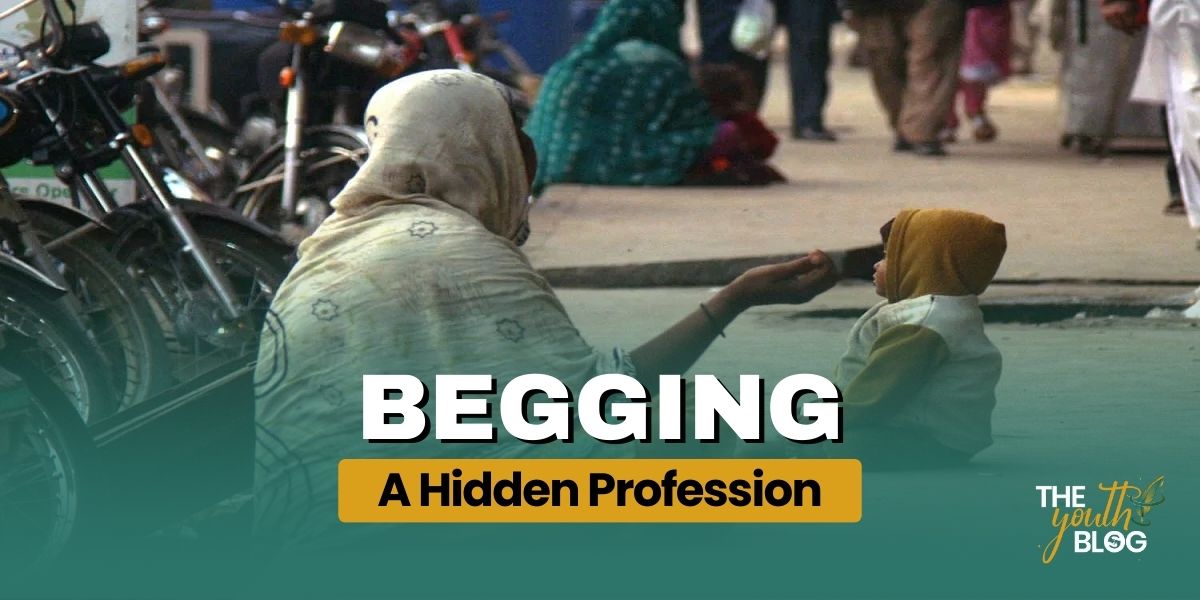
Begging: A Hidden Profession?

Whenever I stand at a petrol pump or pass through a crowded area, my car is often surrounded by beggars within seconds. At that moment, a question repeatedly arises in my mind: why do I find beggars at almost every corner of my country? Begging has been spreading rapidly and has escalated in modern societies, particularly in South Asian countries. The lives of beggars are unpredictable; many face destitution, social barriers, and hardships that push them to margins of society. While some adopt begging purely for survival, other have begun to view it as a means of earning. “A hidden profession” that continues to grow silently around us.
More Pervasive Than We Think
Documentation and historical reports by institutions such as the World Bank, the International Labor
Organization, and UNICEF indicate that in many south Asian countries, begging has increasingly
emerged as a hidden survival profession rather than a deliberate choice. Chronic poverty, unemployment, displacement, and the absence of effective social protection systems continue to push vulnerable
populations toward informal survival strategies. National and non-governmental survey suggest that
nearly 1-2% of the urban population is engaged in street begging, while poverty affects approximately
25-30% people and youth unemployment ranges between These conditions disproportionality affect
migrants, persons with disabilities, and children, leaving families with limited alternatives in the face of
rising inflation and economic instability.
Taking Childhood Away From Millions
Furthermore, within this broader survival system, one of the most disturbing realities is the exploitation of children through organized begging networks. Reports from social welfare organizations and investigative bodies reveal that illegal groups operate in several South Asian countries by coercing children into begging, often by worsening their vulnerability to evoke public sympathy. Such practices constitute a severe violation of child rights and strip children of education, safety and dignity. Instead of opportunities for growth, these children are trapped in cycles of exploitation that damage their physical, emotional, and social development, reinforcing poverty across generations.
Moreover, child begging not only prevents children from attending school but also contributes to lower literacy levels and keep families trapped in generational poverty. Beyond the economic effects, it can have a serious impact on a child’s mental and emotional well-being, taking away their sense of security and confidence.
Strategic Begging?
At the same time, some beggars appear somewhat “lucky” because many people today are willing to give 50 or 100 rupees, yet this expectation can create its own pressures, especially for new or habitual beggars. They often start early in the morning, positioning themselves in busy public spaces such as schools, parks, hospitals, and markets, or outside religious centers on special occasions. Routine beggars tend to be very strategic, sometimes appearing right after a person receives change in a market or after other public events. While begging should not be considered a profession and most religions discourage, it those who are physically able can earn a living through honest work, and no job is too small if done diligently. On one hand, individuals who beg for leisure may never feel satisfied with the amounts they receive, but on the other hand, those who are truly underprivileged deserve our support and compassion.
The Truth Behind Begging
Sometimes, when people give money or help without knowing the real situation, they may unintentionally support beggars who are not genuinely in need. This happens because it is often hard to identify who is begging out of necessity and who is exploiting the system for personal or illegal gain. By giving blindly, even with good intentions, society may encourage habitual begging, strengthen organized begging networks, or fail to help the most vulnerable children and families effectively.
How To Tackle Begging?
To address the problem of begging responsibly, solutions can be divided among the government, society, and institutions:
Government Level:
- Rehabilitation Programs: Establish programs to support beggars in returning to independent life and building a sustainable livelihood.
- Vocational Training & Employment: Provide skill-based training for adults and youth so they can earn a living legally and escape poverty.
- Literacy & Education: Offer basic education for children and adults, including partnerships with NGOs and local institutions.
- Child Protection: Actively identify and stop illegal networks that force children or vulnerable individuals to beg.
- Community Engagement Events: Organize small local workshops or events to teach survival skills, literacy, and employable trades instead of encouraging begging.
- Dignity of Labor: Promote the value of earning through honest work, emphasizing that no work is small if done diligently.
Social Level:
- Responsible Charity: Be aware of who truly needs help before giving money. Charity is valuable, but it should not support exploitation or habitual begging.
- Support Genuine Needs: Encourage those physically able to earn independently rather than relying on alms.
- Awareness & Observation: Observe patterns to avoid being manipulated by organized begging groups.
Institutions / NGOs:
NGO & Institutional Level
- Awareness Programs: Conduct public awareness campaigns on the realities of begging and child exploitation.
- Program Leadership: Lead targeted projects in vulnerable areas to provide education, vocational skills, and support for families at risk.
- Monitoring & Reporting: Help government and society identify illegal begging networks and ensure vulnerable individuals are protected.
Conclusion
At last, being independent is far more valuable than depending on strangers. The bread and butter we
earn ourselves satisfies us far more than money or help borrowed from others. Begging should never be the first option in society especially today, when alternatives exist. Through education, vocational
training, employment opportunities, and responsible social support, people can build a life of dignity and self-reliance. By empowering individuals to earn their own way, we not only reduce the cycle of poverty
but also create a society that values hard work, compassion, and justice.