Petrol Bomb For The Masses; Luxurious Subsidies For the Masters

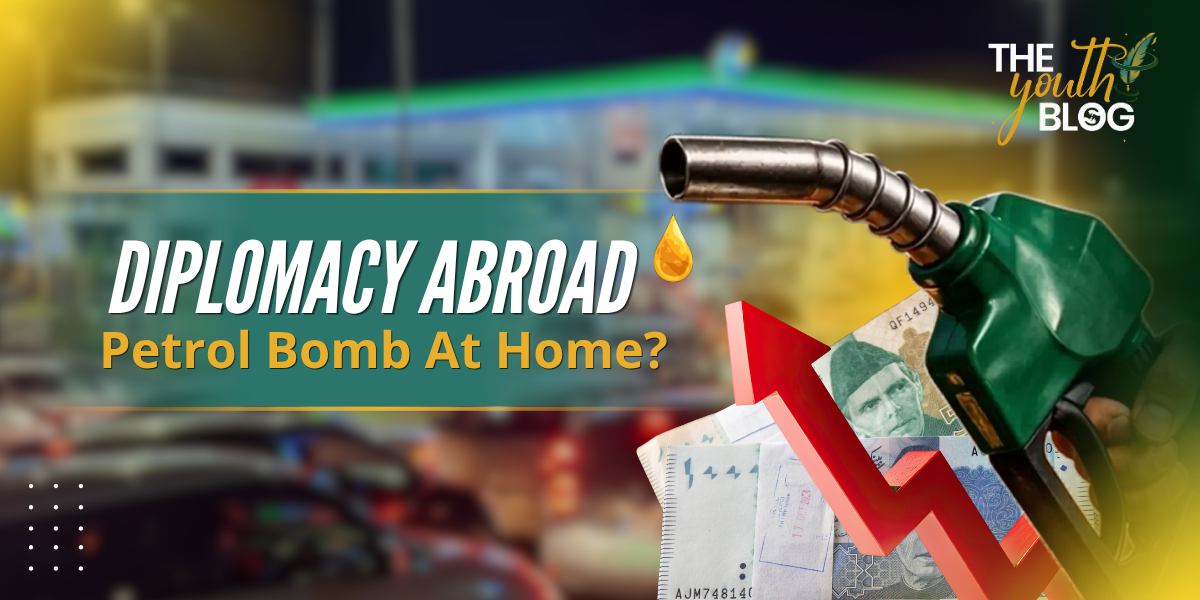
Pakistani government pulled what can either be classified as an ill-planned PR stunt, or the show of absolute cluelessness. On 2nd April, Petroleum Minister, Ali Parvaiz Malik announced an increase of a historic PKR 137 on petrol and PKR 184 on diesel, bringing the prices to an all-time high of PKR 458 and PKR 520 respectively. While the nation tried to absorb the shock, Prime Minister Shahbaz Sharif announced in the late hours of 3rd April a reduction of PKR 80 in the prices, bringing the new price to PKR 378 per liter further increasing confusion in the public.
The Logic Behind The Petrol Hike
Debates have now arisen whether this was a PR tactic or a response to public sentiment, but the underlying issue remains unaddressed: petrol prices are up by PKR. 57, and the ripple impact on the country will be unmeasurable. What is more unfortunate is that instead of being an impact of the global oil crisis, this price hike comes from petroleum levy, raising further concerns on the government’s inability to meet its required fiscal targets through organic sources, having to resort to burdening the public by imposing heavy duties on fundamental resources. A rise in petrol prices will lead to inflation across all sectors, disrupting supply chains.
Austerity For The Public, Luxury For The Masters
Petroleum prices are already an issue of heavy international scrutiny in the backdrop of the ongoing Iran-Israel-USA war, with most countries closely monitoring the situation to help provide maximum support to their public without creating panic and shortages. While the Pakistani government too, has resorted to taking measures to curb petrol usage, they have been half-baked and ineffective at best. School closures and market restrictions have only disrupted the economy further, having unimaginable impact on the quality of education, as well as the ability of middle-class and daily wager workers to run their households. The blatant hypocrisy of the state has not gone unnoticed, with protocol vehicles and private jet purchases by officials, while the routine lives of millions remain affected.
A Successful Foreign Policy?
A comparison of Pakistan’s response to other countries – especially the neighboring states makes the situation appear even worse. For context, India and Afghanistan have not changed petrol prices ever since the war begun, Bangladesh has increased them by a meagre 4% and Sri Lanka by 1.3%. On the contrary, petrol prices in Pakistan have increased by a whooping 42% since the war broke out in Iran! All while our government reminded us non-stop about Pakistan’s successful foreign policy due to which it is not only a mediator, but has also gotten special permission from Iran to use the Strait of Hormuz despite closure. The daylight robbery is simply unfathomable and unacceptable, one which will kill the public slowly.
Impact of Petrol Hike: A Shrinking Middle Class
The Pakistani public has already been struggling to make ends meet. 2026 saw poverty rates rising to 29% according to National Surveys, while the World Bank metrics place poverty rate as high as 44%. Beyond statistics, these numbers have multi-dimensional impacts on the long-term well-being of the nation. The middle-class – which has historically made up almost 40% of the population – continues to shrink, with current estimates being placed around 15-20% of the total population. While consumer prices for all essential goods and services – from oil to rent and food supplies – continue to rise, real wages continue to fall, leaving families struggling for even basics despite working multiple jobs. With the middle class shrinking, Pakistan’s future appears bleak through a loss of culture, innovation and working professionals.
Beyond the Petrol Hike
The petrol hike will have an impact on the cost of all other items – electricity, food, education etc. To make matters worse, the job market continues to worsen, with unemployment at 7.1% – highest in 21 years! With the rising geopolitical tensions and inflation, the prospects of global markets are not much promising either. Massive layoffs, preference of locals and recession threats shrink the opportunities for Pakistanis even further. MNCs are pulling out of Pakistan, and remote jobs which paid in foreign currency are slowly shrinking due to the rise of Artificial Intelligence. Where do we go in order to survive?
Read More: Beyond Borders: Why Pakistani Youth Seeks Opportunities Abroad
A Failure On All Fronts
No one understands what the government’s priorities are, or what steps are being taken in order to resolve any of these issues. Even 4 years after the no-confidence vote that ousted Imran Khan’s government and having abused every possible institution for survival – from the judiciary to the police – the PDM government remains completely clueless as to what it aims to achieve and how. Beyond inflation and unemployment, lawlessness and crimes are at all time high, Pakistan has ranked the highest in terrorism index – with deaths from terrorist attacks highest post 2013. Disasters continue to engulf the country, be natural or man-made. From recurring floods to fire eruptions, yet little to no prevention steps are being taken to curtail any of these.
On top of all of these, loan repayments of the IMF, as well as from friendly countries like Saudi Arabia and UAE provide further weightage to the argument that the current governmental set-up is failing in each department, bringing nothing but crisis to the nation. Had the focus of the government been on economic stability and growth rather than political suppression and lavish trips, Pakistan might have been in a better situation to maneuver through the existing crisis. However, one after another anti-public policy and amendment has brought the state to a position where there remains zero self-reliance or bargaining power.
Where Do The People Go?
This is not even the tip of the iceberg. The average population is frustrated, exhausted and hopeless. Trust in all public institutions has been eroded to an unimaginable amount – not that it makes any difference to those in power. Despite all of this, the public cannot criticize any policies (or the lack thereof) because they’re too busy trying to survive. Also because any criticism will be met with a fine of 2 crores as a best case scenario, or a lifetime imprisonment without any prisoner rights, and open-fire for protesting.
Read More: Let’s Never Normalize the “New Normal” in Pakistan
The nation is in desperate need of a legitimate, credible government. A government which will help steer us through these hard times and focus on the well-being of its own people, rather than giving unnecessary favors to those in the power circles or other governments. Additionally, what we need right now are critical minds which ask the hard questions without fear of arrest or oppression. As a nation, we need to re-evaluate where we went wrong, and how it can be fixed sustainably.
Question is: is there anyone in the existing power circle of Pakistan who has any interest in our collective survival?