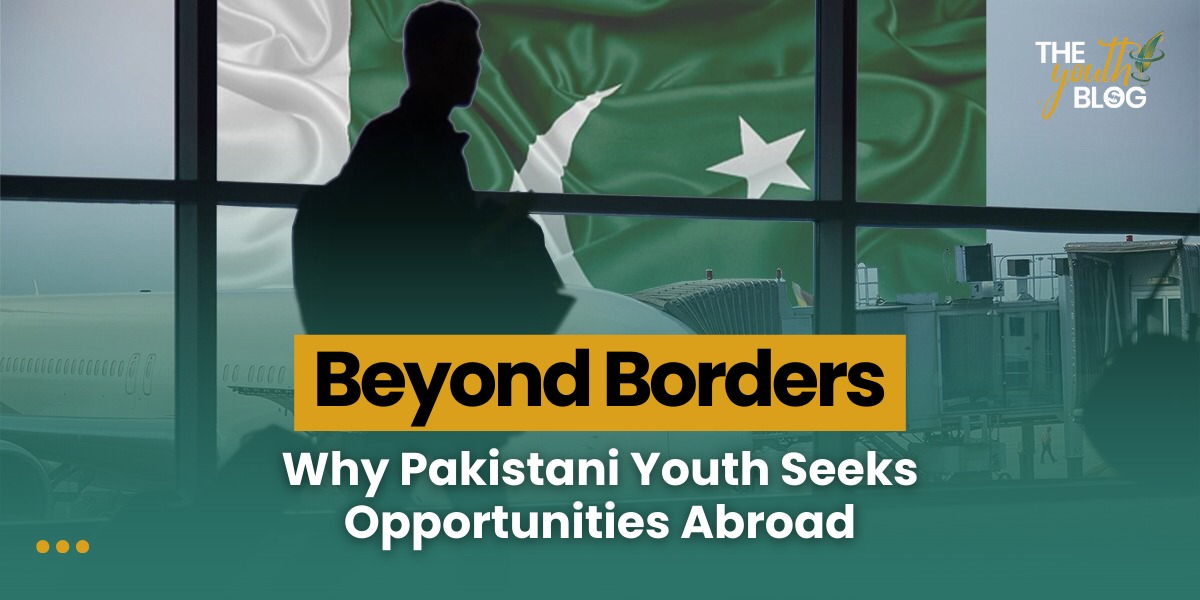
Beyond Borders: Why Pakistani Youth Seeks Opportunities Abroad

Every year, thousands of bright Pakistani students celebrate their degrees with hopes of a
successful future. However, not long after their graduation, many of these same individuals find
themselves preparing documents, applying for visas and planning to move abroad. The joy of
achieving a degree gradually turns into a search for a better life elsewhere for a majority of our youth.
Pakistan’s Silent War – The Loss of Young Professionals
Pakistan is experiencing a quiet however constant exodus of its most valuable asset — its
youth. From ambitious graduates to skilled professionals, an increasing number of young
Pakistanis are seeking opportunities abroad. In the 2024-25 fiscal year, the healthcare sector
reached a breaking point. Reports indicate that nearly 5,000 doctors and 2,500 nurses
emigrated in a single year. Similarly, the IT sector once hailed as the engine of Pakistan’s future
economy is losing its best architects. Over 13,000 IT specialists and software engineers left in 2024. This trend is not merely a pursuit of better earning or foreign lifestyles; it is a reflection of
deeper structural challenges that hamper talent domestically.
Read More: Wreck-ed State of National Affairs
Why Is The Youth Leaving Pakistan?
1. An Outdated Educational System
The main issue lies in the gap between what education systems offer and what the job market
needs. Universities in Pakistan continue to produce thousands of graduates each year, yet the
domestic job market struggles to employ them. Many individuals face unemployment,
underemployment, and inadequate pay, which compel them to look for better opportunities
abroad. Many universities focus on theory over practice, leaving students without the critical
skills demanded by modern industries. For countless students and professionals, leaving the
country is not a matter of choice but a necessity. They are struggling to secure stability, career
growth and a better life.
2. The Absence of Merit and Stability
Political instability and inconsistent governance contribute significantly to the issue. Merit-
based systems are often undermined by nepotism and favoritism, discouraging young people
who aspire to build careers through hard work and innovation. In addition to inflation,
insecurity and limited access to basic services, the domestic conditions often appear less
promising than opportunities abroad.
A Country That Exports Its Talent Cannot Import Its Future.
The implications of this brain drain are profound. When talented doctors, engineers, scientists
and entrepreneurs leave, the country loses not only human capital but also the potential to drive innovation and development. Education alone cannot sustain a country’s growth if the brightest minds do not find viable avenues to apply their skills domestically.
Hope Not Lost: The Way Forward
Yet all is not lost. Many countries have successfully transformed brain drain into “brain gain” by engaging overseas communities through investments, knowledge sharing and collaborative projects. Pakistan could follow a similar path, creating incentives for skilled professionals abroad to contribute to national development while making efforts to retain talent within the country.
A Multi-faceted Approach
Addressing this crisis requires a multi-faceted approach. Economic reforms must generate jobs and support entrepreneurship, while educational institutions need to align curricula with market needs. Transparency, meritocracy and effective governance must become the foundation of the country’s systems. Most importantly, young Pakistanis must feel that their ambitions are valued and that their future is secure in their own country.
A 2023-2024 PIDE survey indicated that nearly 67% of Pakistani youth expressed a desire to leave the country if given the opportunity. The youth of Pakistan are not abandoning their homeland for leisure or luxury; they are seeking opportunities that the country currently fails to provide. If this trend continues, Pakistan risks losing not just individuals, but its future leadership and intellectual capital.
The question is no longer why they are leaving, it is whether Pakistan is ready to give them a reason to stay.
The writer is pursuing a degree in Political Science at the International Islamic University, Islamabad, works as a freelance columnist and aspires to join the civil service.